
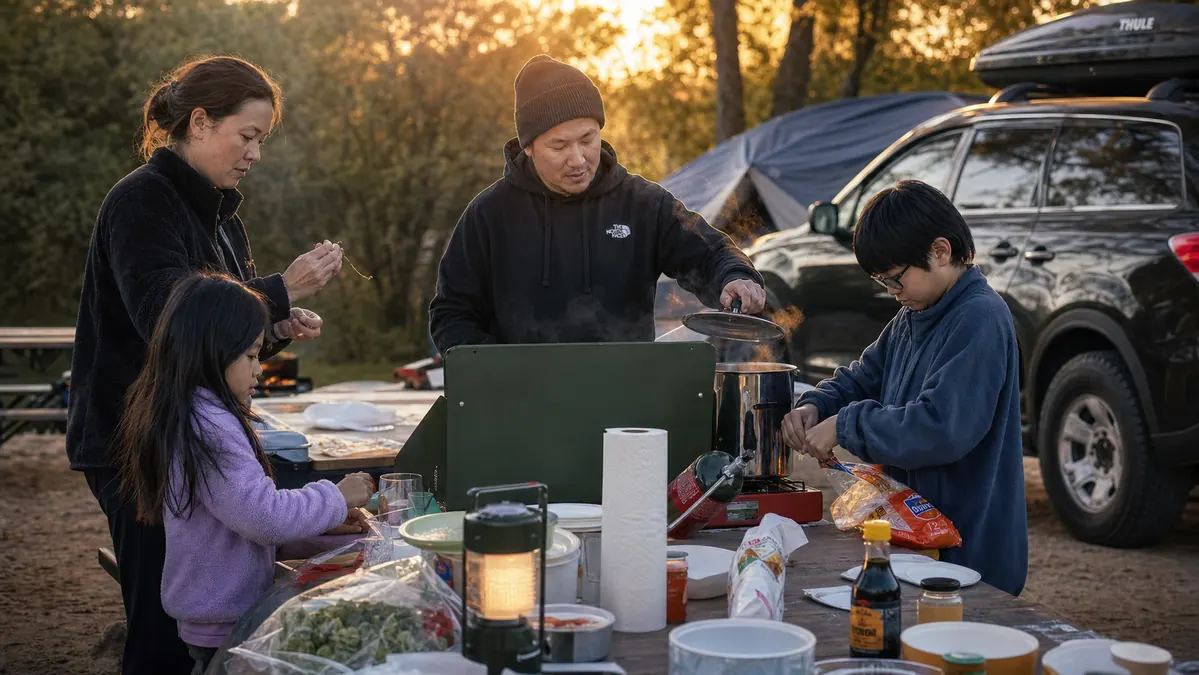
After a full season of car camping trips with my family, I keep landing on the same conclusion: a double burner camp stove beats a single burner stove for almost any group bigger than one person. I ran a Gas One Propane Double Burner stove through spring, summer, and early fall this year, cooking everything from pancake breakfasts to full spaghetti dinners at the picnic table, and comparing notes against the single burner stoves I used on solo trips before that. The difference showed up every time two dishes needed to happen at once. Two pots at once instead of one pan at a time turned out to matter more than I expected once I actually tracked it across a whole season of trips.
Here's the short version before the list. If you're cooking for more than one person, or you just like a hot side dish instead of a lukewarm one, a two burner stove earns its extra size in the gear tote. I get into the daily details of running one all season in my full season review, but this list is about the double burner format itself, using the same Gas One stove I've now hauled to more than a dozen weekend trips. None of this is about chasing more BTUs for the sake of it, it is about not standing at the table waiting on one ring to free up while a group is hungry.
Tired of One Burner Making You Choose What Gets to Be Hot?
The Gas One Propane Double Burner stove is the same one I've used for a full season of family camp dinners. Two full burners, fold-up wind panels, one connection to set up. Check today's price before your next trip.
Amazon Check Today's Price on Amazon →You Get Two Finished Dishes at the Same Time
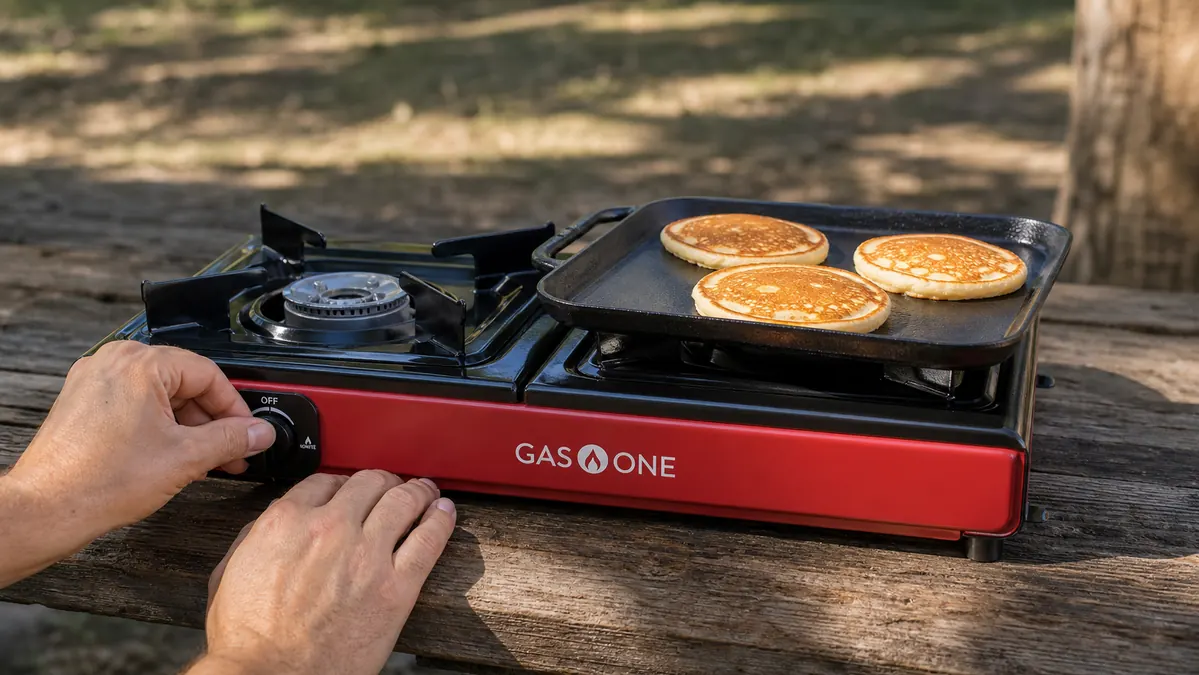
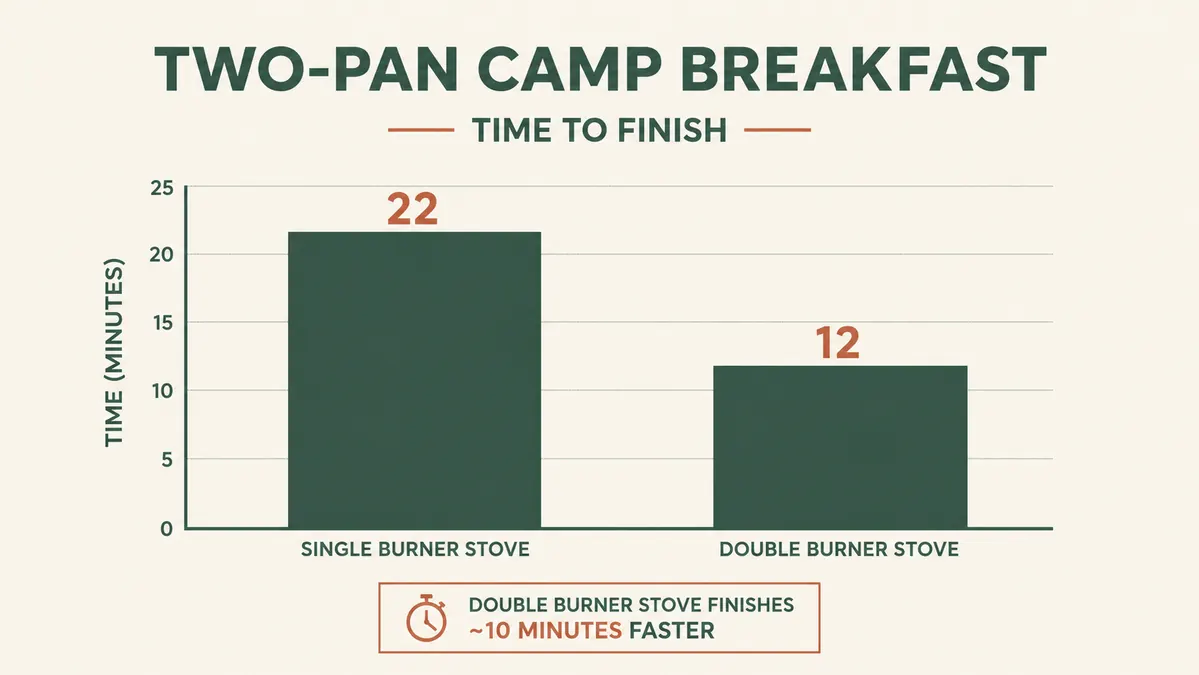
The biggest reason I switched is timing. On a single burner stove, eggs go cold while bacon finishes, or the kids are hungry while pancakes stack up one at a time. With a double burner stove like the Gas One, I run a griddle pan on one side and a pot of water on the other, and breakfast lands on the table together instead of in shifts. That alone changed how camp mornings feel for my family.
More Total Heat Output When You Need It
Even if you only light one burner at a time, having two strong burners on the same stove means you're not stuck choosing between a fast boil and a slow simmer. I've boiled a full pot of water for pasta on one side while keeping sauce warm on the other, something a single burner setup can't do without pulling a pan off entirely.
Built-In Wind Resistance a Single Burner Doesn't Have
Most double burner stoves, including the Gas One I've used all season, come with fold-up wind panels on three sides of each burner. On an exposed picnic table with any breeze, that panel is the difference between a stove that stays lit and one that keeps blowing out. One thing worth repeating no matter which stove you own: this is an outdoor-only cook setup. I never run it inside a tent, screen room, or any enclosed vestibule, wind or no wind. Propane stoves need open air, full stop.
One Stove Instead of Juggling Two Separate Setups
Before I upgraded, I carried a single burner stove plus a backup, because one burner alone couldn't keep up with a real dinner. That's two fuel connections and two stoves to pack and maintain. The Gas One folds down into one case that holds both burners, the hose, and the regulator in one spot in the truck bed. Less stuff to track down at six in the evening when everyone's hungry.
Cooking for a Family Doesn't Mean Shuttling Pans
With four people at our site, a single burner stove means someone's plate is always waiting on someone else's pan to free up. A two burner stove lets me run a big pot of chili on one side and warm tortillas on the other at the same time, so the whole table eats together instead of in waves. If you want the full walkthrough on turning two burners into a real dinner, I laid it out in how to cook full meals at camp with a stove.
Room for a Griddle and a Pot Side by Side
The cooking surface on a double burner stove is wide enough to run a flat griddle on one burner and a saucepan or kettle on the other without them touching. On a single burner, you're limited to whatever fits on that one ring, which rules out a griddle for anything more than one item at a time.
A Backup Burner When One Acts Up
Camp stoves get dirty, jets clog, and connections loosen after a season of use. When one burner on my Gas One sputtered mid-trip last summer, the working second burner finished dinner while I sorted out the first back home. A single burner stove gives you no fallback at all if it's having an off night. More on the rough edges I've run into in my honest review.
One Fuel Connection Instead of Managing Multiple Canisters
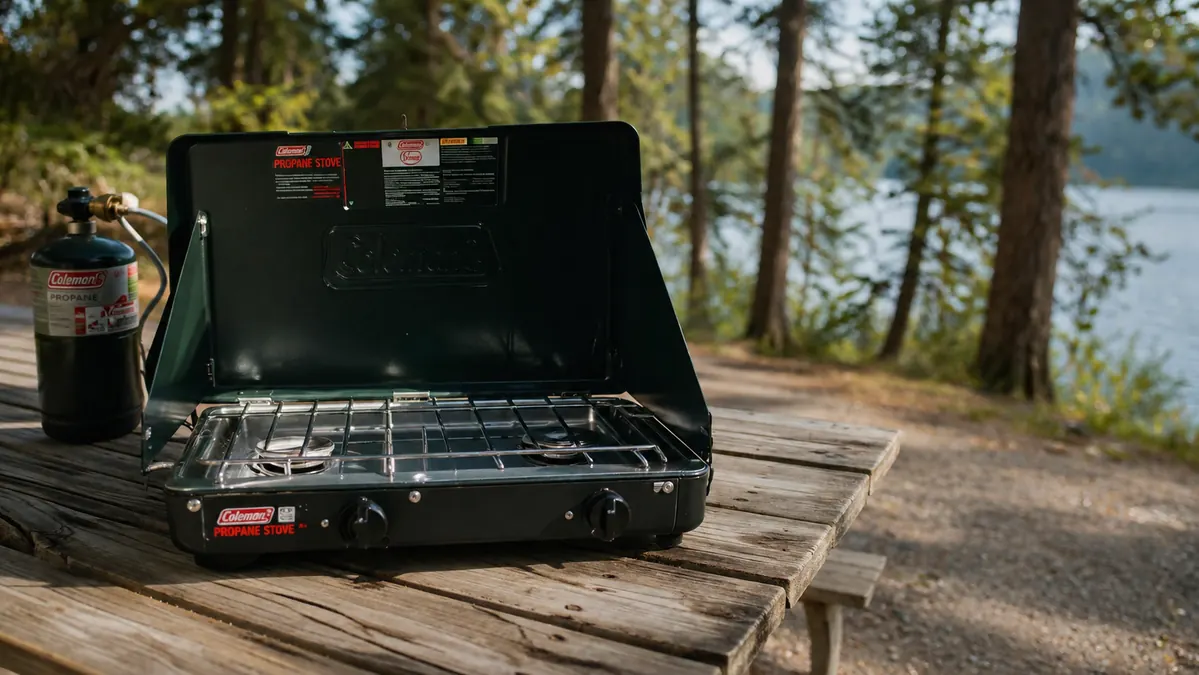
Running two separate single burner stoves usually means two separate propane canisters or adapters to track, screw in, and check for leaks. A double burner stove runs both burners off one connection, which means less setup, less to double check before you start cooking, and one less thing to forget at home.
A Wider, More Stable Footprint on a Picnic Table
Double burner stoves are built with a longer base and legs set further apart, which means less wobble on an uneven picnic table or a patch of packed dirt. A single burner stove, especially the small canister-top kind, tips more easily once there's a full pot sitting on it. I compared this directly against one well-known single-brand alternative in Gas One vs. Coleman Triton.
It Grows With How You Actually Camp
A single burner is fine for one person boiling water for coffee. But the moment you're cooking for a partner, kids, or a group, a double burner stove like the Gas One stops being a nice-to-have and becomes the thing that makes real meals possible at camp instead of another night of freeze-dried packets. That's the shift I noticed most after a full season of using it.
What I'd Skip
What I'd skip is any double burner stove without side wind panels, and any temptation to set one up under a tent vestibule or awning to stay out of the rain. I've done a full season of testing outdoors only, and that's the one rule I don't bend even on a wet, miserable night. Set it up on a table or the tailgate, out in open air, and let a tarp or canopy handle the rain instead of the tent itself. Beyond that, if you're truly cooking solo and never for anyone else, a single burner stove is lighter, smaller, and cheaper, and I won't pretend otherwise. A stove that only holds one pan at a time still has its place for a solo overnighter, I just would not hand it to a family trying to feed four people off one open flame.
A double burner stove doesn't just cook faster. It lets a family actually eat dinner together instead of in shifts.
Ready to Stop Cooking in Shifts at Camp?
A full season of testing convinced me a double burner beats a single burner for anything more than a solo trip. Take a look at the same Gas One stove I've been running all year before your next campout.
Amazon Check Today's Price on Amazon →