
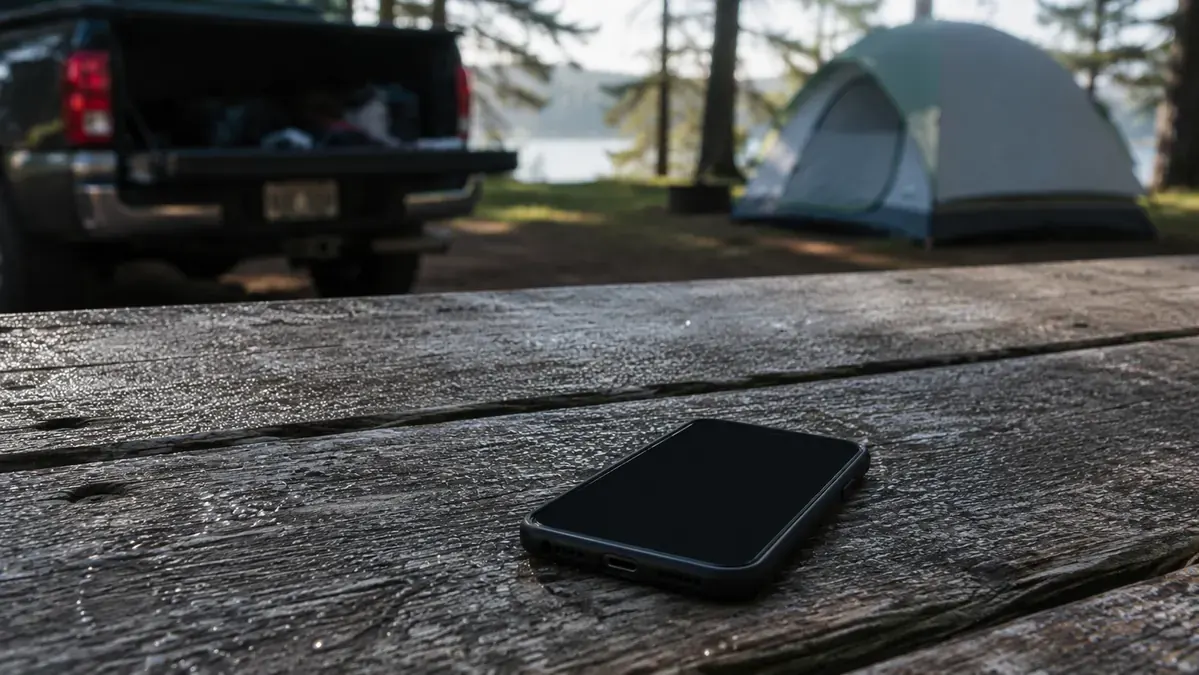
It happened on a Friday night at a state park two hours from home, the kind of trip I'd normally call routine. My phone had eight percent left when we pulled in, and I told myself I'd top it off from the truck later that night. Later never came. By nine the next morning the phone was dead, my watch hadn't synced the trail map I'd downloaded, and I was standing at the tailgate trying to remember which cable fit which port while my kids waited for me to pull up directions to the trailhead.
That's not a dramatic story. Nobody got hurt, nobody called for help. But it's the kind of small failure that sticks with you, and it's exactly the gap a small purchase called the Anker 521 ended up closing a few weeks later, though I didn't know that standing at the tailgate. It wasn't really about the phone. It was about how much of camp I'd quietly been running around a problem I'd never actually solved: keep the truck running long enough to trickle-charge something, or don't charge it at all and just accept dead batteries by the second day.
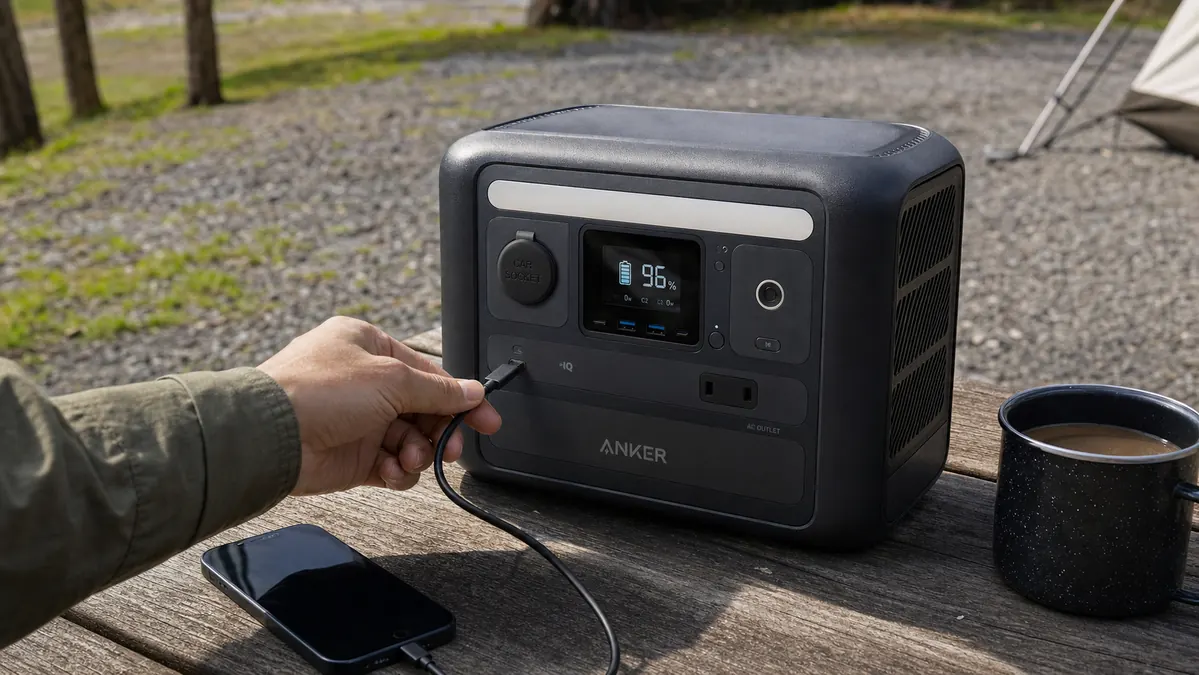
I'd tried the usual patches before that trip. A car charger that only worked with the engine on. A pack of AA batteries for the lantern that ran out exactly when we needed them most. A generator I looked at seriously for about a week before I remembered I don't actually want to haul a loud gas engine to a quiet campsite. None of it solved the actual problem, which was that I needed a real charge sitting in camp, ready, without needing the truck or a store run.
So when I got home from that trip, I did what I usually do when I'm annoyed enough to actually fix something. I read reviews for two nights straight instead of watching TV, and I kept landing on the same category of product: portable power stations built around LiFePO4 batteries instead of the older lithium-ion cells that lose capacity fast. I ended up ordering the Anker 521, a compact 256Wh unit that was small enough to live in a milk crate in the truck bed without becoming its own packing project.
I wasn't trying to upgrade my camping. I was trying to stop managing around one dumb, avoidable problem.
Tired of babysitting a dying phone at camp?
This is the box that ended that for me. It's worth five minutes to see if the Anker 521 fits your setup too.
Amazon Check Today's Price on Amazon →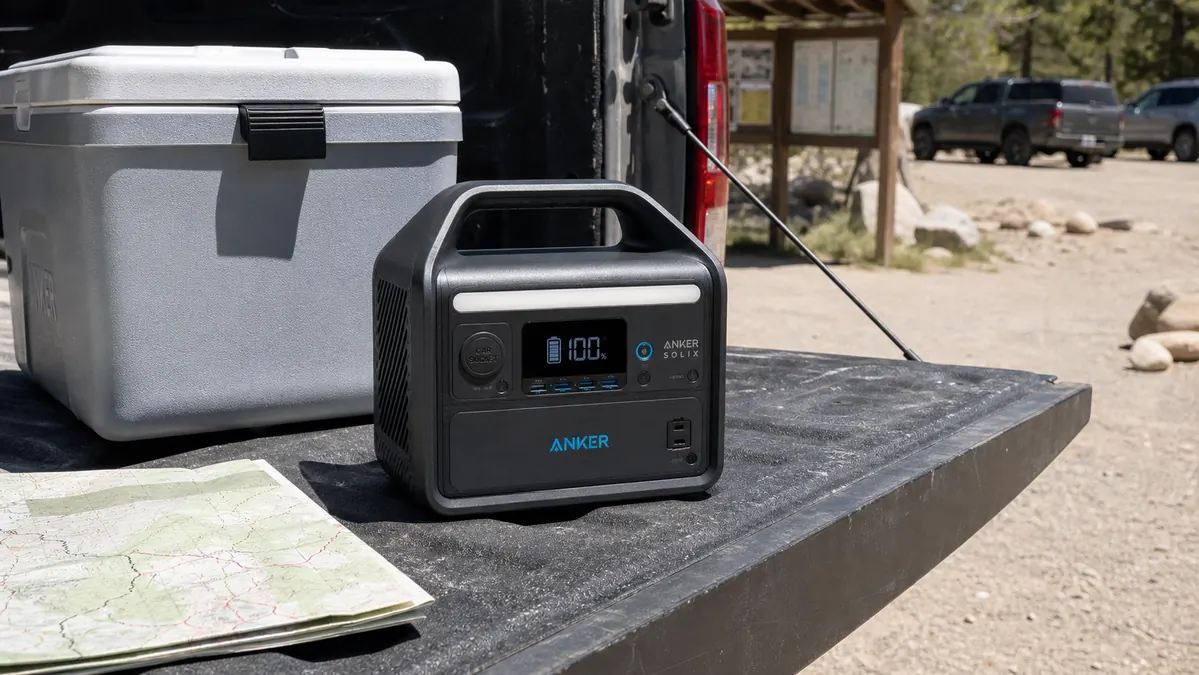
The first trip with it was almost anticlimactic, which is exactly what I wanted. I charged the Anker fully from the wall the night before, set it on the picnic table when we got to the site, and plugged in two phones overnight without thinking about it again. The lantern stayed lit every evening instead of getting rationed. When we ran a small cooler for a three-day stretch, the power station handled it, though it did need a top-off by day two, which is a fair tradeoff for a unit this size and something I cover in more detail in my full season-long review.
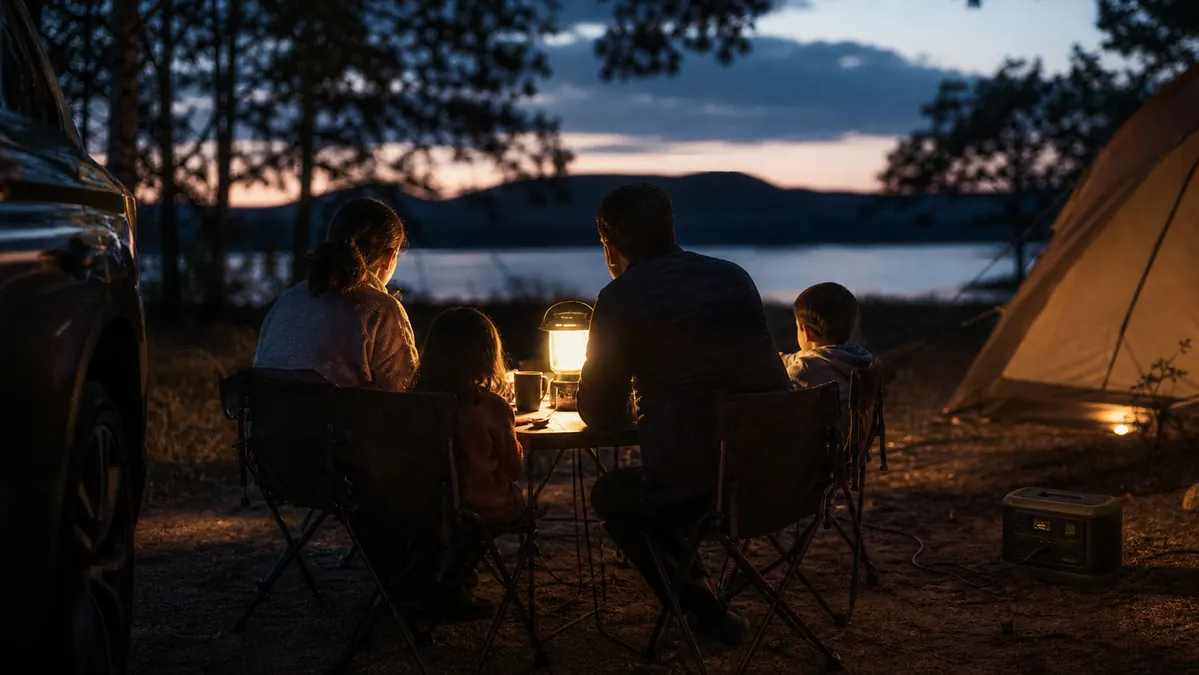
What actually changed wasn't dramatic. Nobody in my family said anything about it out loud. But the small friction of camp mornings went away. Nobody was hunting for the truck keys to charge a phone. Nobody was rationing the lantern battery at 8pm because we'd need it later. The Anker just sat on the table doing its quiet job, and after enough trips of that, I stopped thinking about power at camp as a problem I had to manage. It was just handled.
I'll admit the honeymoon phase wore off a little. I found a couple of real limitations along the way, the inverter can't run anything with a heating element, and solar recharging off a small panel is slower than I expected. I wrote about those honestly in my honest review of where it falls short, because a product doesn't have to be perfect to be the right fix for a specific problem. It just has to solve the problem you actually have.
Two camping seasons later, the Anker still rides in the same milk crate behind the cab. I don't think about it much anymore, which is probably the best compliment I can give a piece of gear. It stopped being a purchase and became part of how we pack, the same as the cooler or the folding chairs. Nobody's phone has died at a trailhead since.
What I'd Tell You If We Were Sitting at My Kitchen Table
If you're reading this because your own trip had a version of my dead phone morning, here's the honest version of what I'd say over coffee. You don't need the biggest power station on the market, and you don't need to solve every possible camping scenario at once. You need something sized to what you actually do, phones, a lantern, maybe a cooler for a weekend, that recharges predictably and doesn't need babysitting. That's a smaller ask than it sounds, and it's the one thing that quietly made the most difference in how our trips actually go. I'm not telling you it fixes everything about camping. I'm telling you it fixed the one thing that used to bug me every single trip, and that turned out to be worth more than I expected.
One less thing to think about at camp.
That's really what this came down to for us. If you want the same fix, check today's price on the Anker 521 and see if it's the right size for your trips.
Amazon Check Today's Price on Amazon →